

The crop decides.
We only respect it.
Moringa, coconut, paddy and pulses grow on their own terms in Tamil Nadu — in a dry season, on small holdings, in a short window. Our sourcing is designed around those facts rather than against them.
Value that stays in the village is value that comes back next season.
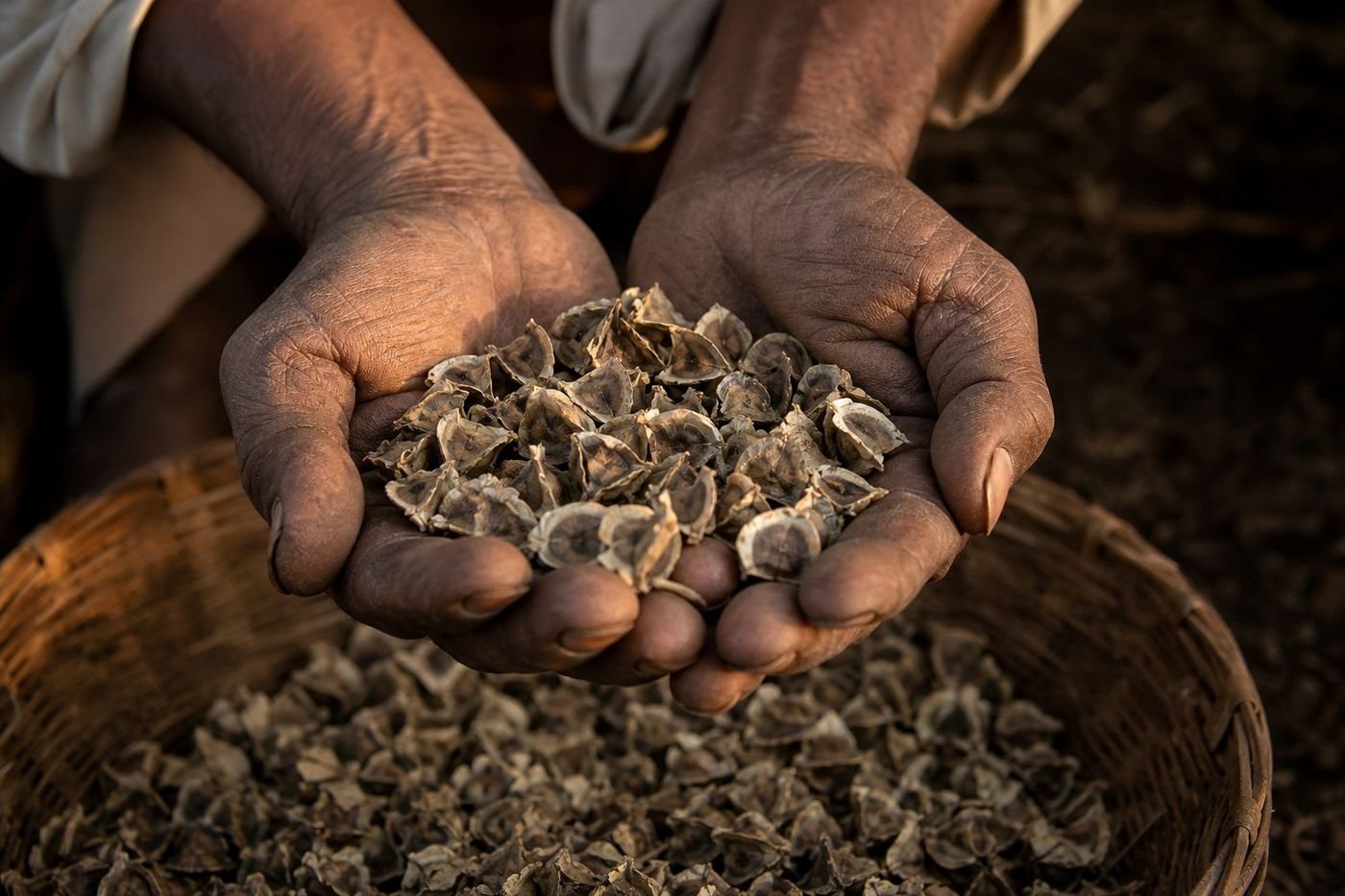
Tamil Nadu's moringa belt is not a plantation economy. It is thousands of small holdings — a few acres, a borewell, a family's labour, and a harvest that has to be dried and moved fast before it loses value.
When a commodity passes through four intermediaries, the farm absorbs the risk and sees the least of the price. We cut that chain where we can: collection at the gate, weighing in front of the grower, payment settled promptly and an explanation of the grade afterwards.
It is not charity and we would not describe it as such. A grower who is paid properly, season after season, plants again, dries better and brings us cleaner material. The commercial interest and the right thing happen to point the same way.
One tree. Four products.
Almost nothing wasted.
Moringa is unusual in that every part of it has a market. That is what makes it a resilient crop for a smallholder — and what makes our kernel line worth running properly.
Leaf
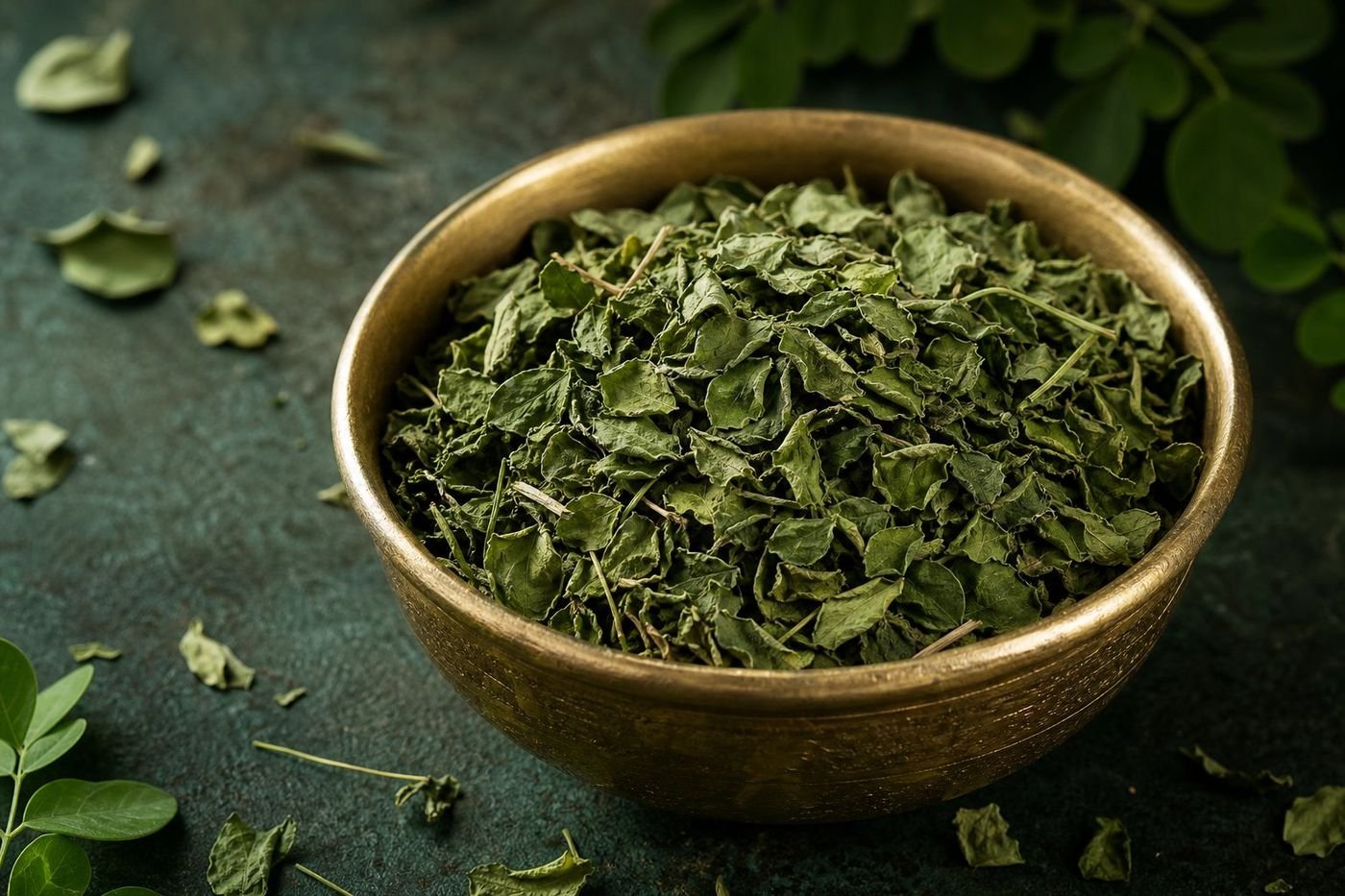
Stripped, shade-dried and cleaned for tea, powder and extract — the fastest-returning part of the harvest.
Kernel
The de-husked seed heart, pressed for ben oil — a high-value, stable oil used well beyond food.
Seed
Cleaned whole seed for oil mills and for growers establishing new plantations — a second life for the same harvest.
Oil cake
The press residue returns as a soil input and livestock feed — closing the loop instead of creating a disposal problem.
What responsible
sourcing means here.
Three unglamorous practices, applied consistently. No claims we cannot evidence, no certifications we do not hold.
Moringa tolerates dry conditions and poor soils. Encouraging it in the right belts reduces pressure on groundwater compared with water-intensive alternatives.
Storage discipline is the cheapest quality measure there is: moisture control, sealed bags, pest monitoring and stock rotation by harvest date.
Fewer hands between farm and bag means less handling damage, better traceability and a larger share of the price reaching the grower.
A lot number that
answers questions.
Give us the lot reference printed on a bag and we can tell you where it came from, when it was graded and who checked it. That is the entire system, and it is written down.
Grower, village, date
Recorded at the gate with weight, farmer name and collection round.
Moisture & admixture
Measured on arrival; rejected or re-dried before it joins a grading batch.
Cleaning & grading
Sieve, hand-pick and cut-test results noted against the batch code.
Batch code on every bag
Net weight, packing date and grade printed or tagged before sealing.
Invoice & dispatch record
Lot reference carried onto the GST invoice and the loading tally.
Origin visits
See where it grows.
Buyers visiting Chennai are welcome to spend a morning in the collection round and an afternoon on the grading floor. It explains more than any brochure.